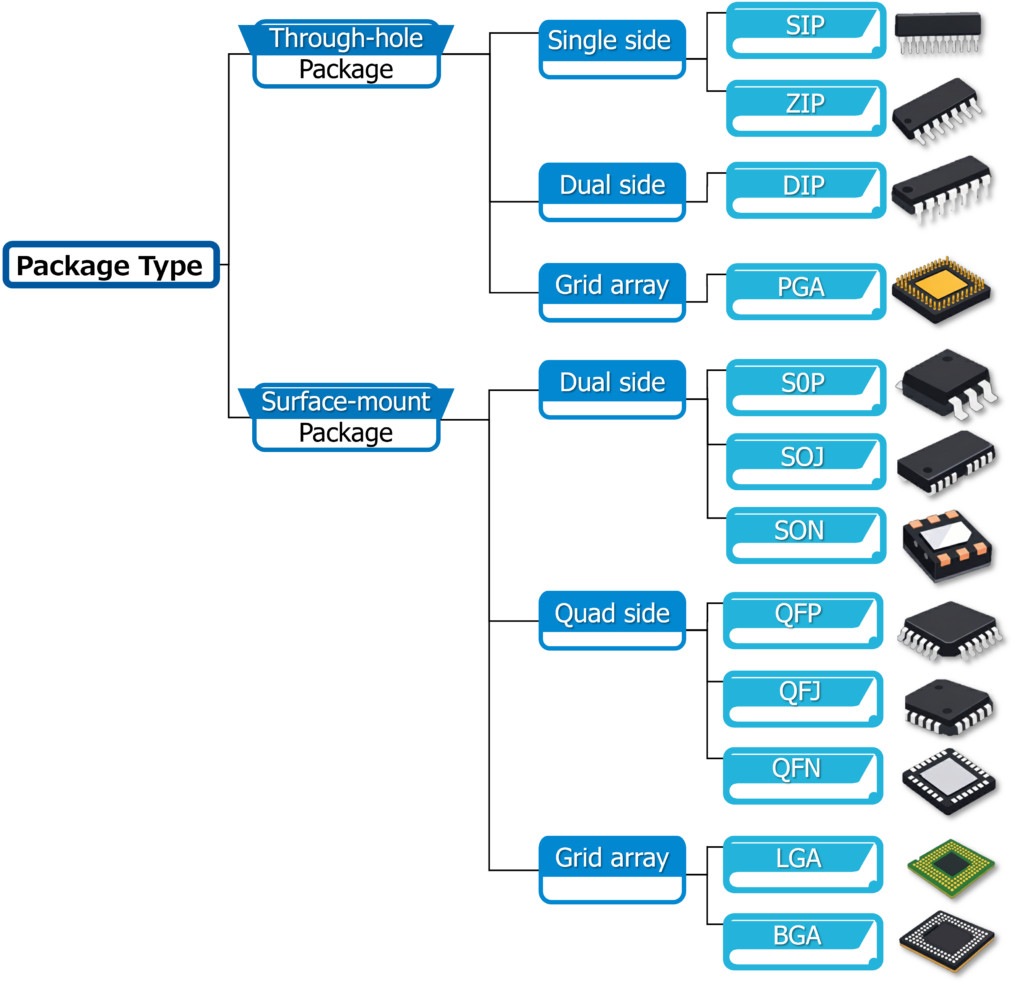
What makes these packages unique? A simple comparison of the main types
LGA & BGA are representative surface-mount semiconductor packages widely used in today’s industry. Semiconductor packages are broadly divided into two types: through-hole packages and surface-mount packages. Surface-mount packages are mounted directly onto the land pads of a PCB without using holes in the board. Because they are compact, lightweight, and suitable for high-density mounting, they are widely adopted in many modern electronic devices.
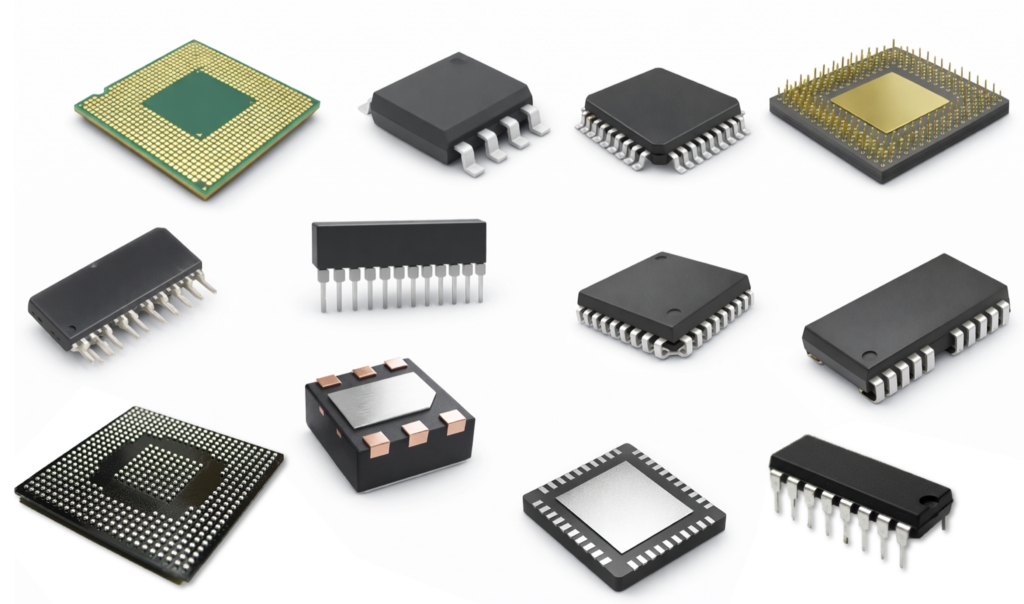
LGA & BGA : packages supporting high density and high Performance
As IC speeds and pin counts rapidly increase—especially in CPUs, GPUs, and communication processors—engineers have made LGA and BGA the mainstream bottom-connection package types. They developed these packages to eliminate long lead wires, improve electrical characteristics, increase contact area for better performance, and enhance heat dissipation.
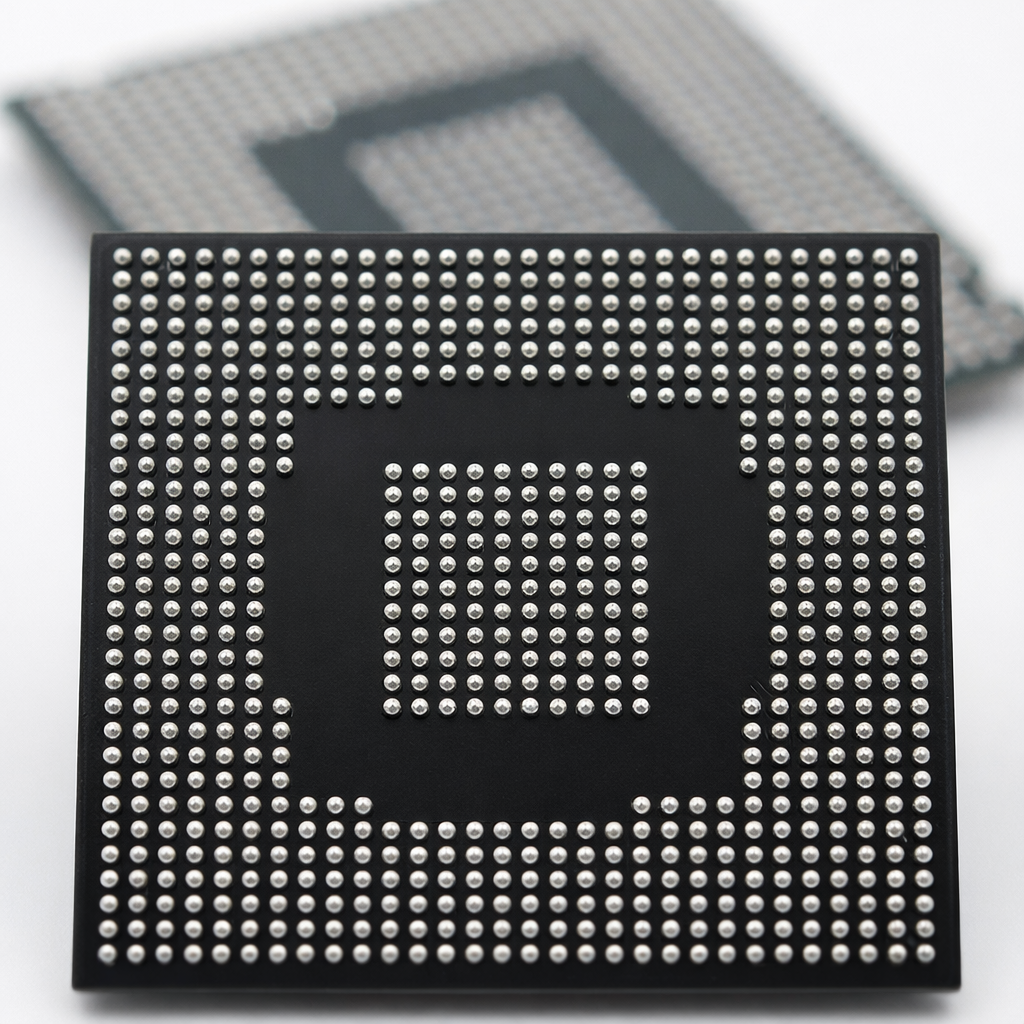
BGA (Ball Grid Array) — A High-Density Package with Solder Balls
Engineers design BGA by arranging solder balls in a grid pattern on the underside of the package. This innovative package significantly increases the number of pins. Key features of BGA include:
- Supports a high pin count (from several hundred to over 2,000 pins)
- High connection reliability
- Better heat dissipation than leaded packages
- High solder joint reliability
Engineers widely use BGA in smartphone application processors, GPUs, AI chips, DDR memory, high-performance SoCs, and many other devices. As a result, BGA has become a core package in modern electronics.
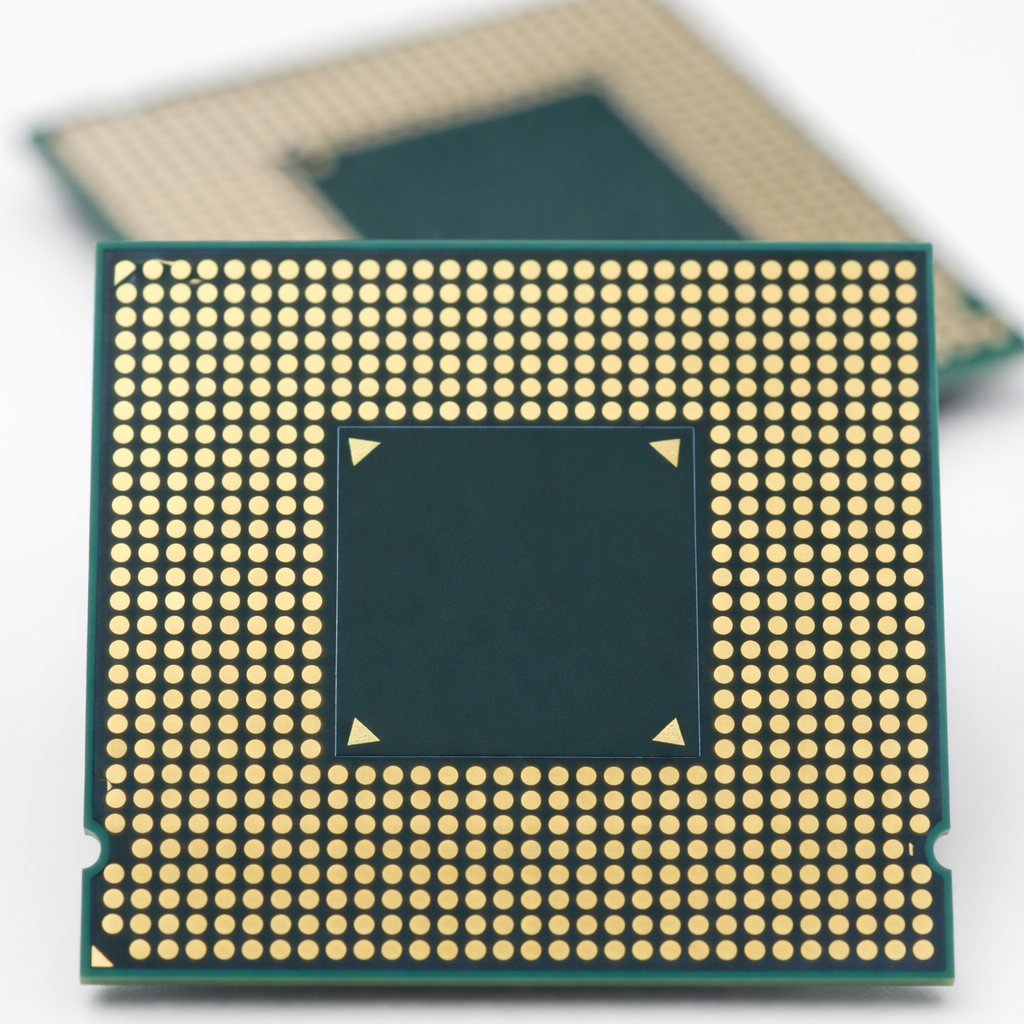
LGA (Land Grid Array) — A Land-Contact Type Without Balls
Engineers design LGA by removing the solder balls used in BGA and arranging flat metal pads on the underside of the package. Key features of LGA include:
- Ultra-low profile design (some standards have external terminal heights of 0.1 mm or less)
- Low parasitic inductance, making it ideal for high-speed operation
- Direct contact with the land pads on the board, either through solder mounting or socket contact
Engineers widely use LGA in high-speed communication ICs such as SerDes and PHY, as well as in FPGAs, ASICs, high-frequency devices, power modules, and CPUs for PCs and servers, including Intel’s LGA115x and LGA1700. As a result, engineers position LGA as a standard package for high-performance processors.
Technical pros and cons of LGA & BGA
| Advantages | Disadvantages |
|---|---|
| Ideal for high-speed and high-frequency applications | Requires very high mounting precision |
| Solder balls help absorb stress | Rework is difficult |
| Enables maximum wiring density | Requires extremely precise test fixtures |
For LGA & BGA, the biggest technical challenge is how to inspect what cannot be seen directly.
Fixtures required in LGA & BGA inspection and test processes
Engineers face new challenges in inspection and testing due to the unique structures of LGA & BGA, along with increasing package density. As miniaturization advances and pin counts rise, they must ensure higher mounting accuracy, stable contact reliability, and resistance to environmental changes.
- Miniaturization of BGA ball diameter to 0.35 mm or smaller
- For LGA, alignment accuracy is even more critical because there are no balls
- Contact stability with high pin counts (over 1,000 pins)
- Contact failure caused by flux residue during thermal cycling
Seiken’s Solutions for LGA & BGA Package Testing
| Challenge | Example solutions from Seiken *Click on each solution to learn more. |
|---|---|
| Pad contact for LGA | Flat probe for planar pads |
| Fine contact with BGA balls | Crown-type probe |
| Simultaneous testing of over 1,000 pins | IC socket with vertical probes |
| Thermal test compatibility | Heat-resistant probes |
LGA & BGA packages support today’s high-performance electronic devices as core technologies. They meet the growing demands for higher speed and smaller size, while engineers require advanced probes and precision fixtures to ensure accurate inspection. Seiken provides probe and fixture technologies that ensure the quality of these latest packages.
If you face any challenges, contact us anytime. We will propose the most suitable test solution.